Loading Cardiovascular Case Study
Cardiovascular Case Study

Select the "Begin" button to start.

Introduction

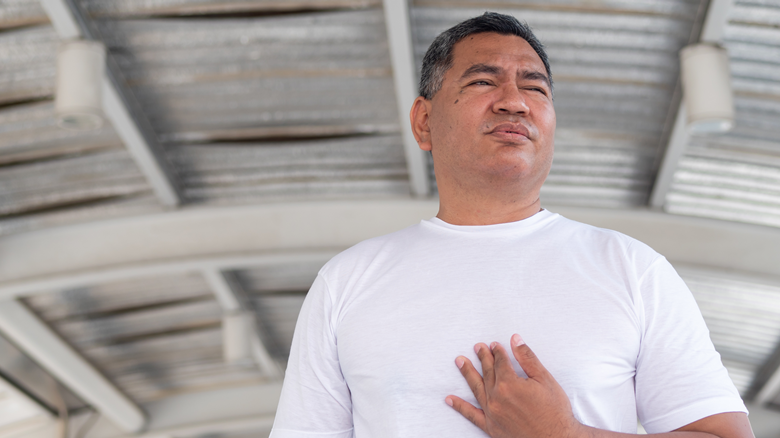
image of steven

Steven, a 48-year-old male, presents to the office with mild-to-moderate chest pressure with radiation to his back.

Review Steven’s history, vitals, and office notes taken by your practice’s RN.

Office Notes

Steven reports that he was awakened from sleep at 7:00 a.m. with chest pressure, initially described as soreness across his anterior chest and through to his back.

His wife drove him to the office to be here when it opened at 9:00 a.m. She tried to convince Steven to go to the emergency room, but he emphatically refused, insisting on going to the office first.
Patient History
  • Past medical/surgery history: He was diagnosed with type II diabetes last year.
  • Family history: He has a family history of premature coronary artery disease. His father died of acute myocardial infarction (AMI) at age 45. One brother died of AMI at age 49.
  • Social history: He has smoked for 25 years but has reduced his smoking to 1 pack per day since his brother’s death 2 years ago. He has put on 25 pounds in the past 2 years and is generally sedentary.
Medications

Steven has been fairly controlled with his diet.

Metformin, 500 mg daily. His last hemoglobin A1c 2 months ago was 7.4.

He took an oral aspirin on the way to the office.

Allergies

Latex

Vitals

He is anxious and shows Levine’s sign. He is slightly diaphoretic.

Vital signs

BP: 192/96, P: 102, R: 22, T: 97.8. His SpO2 is 90%.

Diagnostic Tests

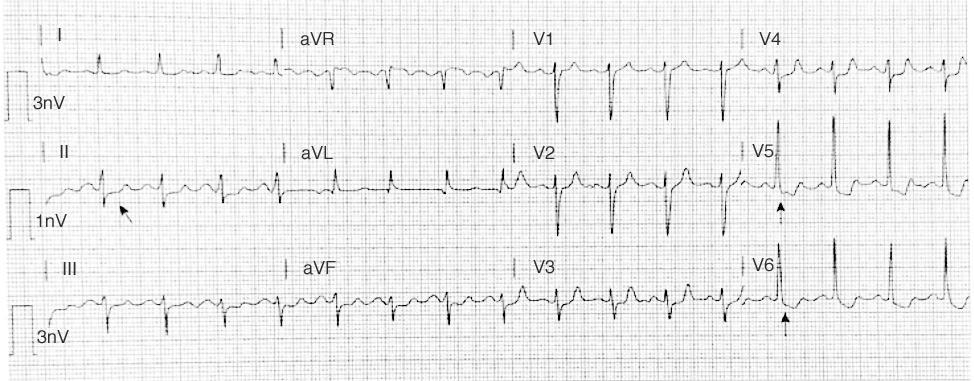
ECG

ecg

Analyze Steven's ECG to confirm his diagnosis.

test

Physical Exam

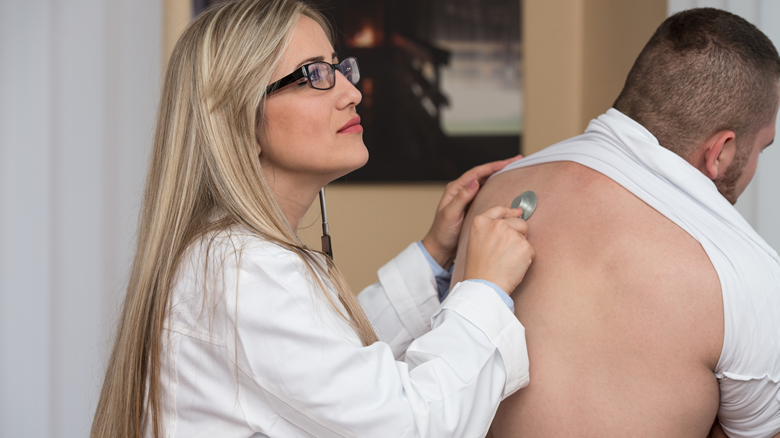
You enter the room after reviewing the RN’s notes in Steven’s record. You greet Steven and then ask him some questions before you begin his physical.

rate your pain

Now, begin Steven’s physical.

exam

Confirming the Diagnosis

Which diagnostic or imaging studies should be considered to assist with or confirm the diagnosis? Select all that apply.

test

Differential Diagnosis

After completing Steven’s physical and diagnostic testing, what is the most likely differential diagnosis?

What supports this diagnosis?

What is your immediate plan of treatment?

Activity is complete.
Modern Campus CMS